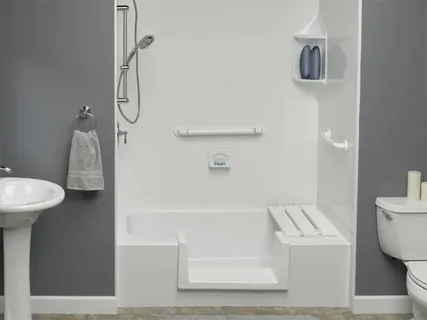

Tub to walk in shower in Westland, MI. conversion costs and options in Westland, MI. Compare prefab, tile and curbless showers, plus how to choose a contractor.
Homeowners in Westland face a problem. That old bathtub takes up half the bathroom. You have not taken a soak in years. Stepping over a high tub wall gets harder every winter. A tub to walk in shower conversion solves both problems. It opens up the room adds safety and gives you a space that fits how you actually live.
We have converted tubs to showers across Wayne County for years. We have seen what works in these homes what fails and what questions homeowners should ask before they sign a contract. This guide covers everything you need to know about tub to walk in shower conversions in Westland from choices to realistic costs and how to spot a contractor who understands local conditions.
What a Tub to Walk In Shower Conversion. Why Westland Homeowners Choose It
A tub to walk in shower conversion removes your existing bathtub and replaces it with a shower that has a low or zero-threshold entry. The new unit can be a prefabricated stall a custom tile build or a curbless wet-room design. The key difference from a tub-shower combo is the entry height. A walk in shower has a curb of 2 to 4 inches or no curb all.Tub to walk in shower in Westland, MI
Homeowners in Westland choose this upgrade for three reasons. First the space opens up. Removing a 60-inch tub and installing a 36-by-48-inch walk in shower frees floor area. Makes a small bathroom feel larger. Second the safety improves. A low curb eliminates the step-over hazard that causes most bathroom falls. Third it adds value. According to This Old House 97% of homeowners who completed a bathroom renovation reported satisfaction with walk in showers ranking as a desired feature for buyers.
The National Kitchen and Bath Association places the national average bathroom remodeling price at $16,000. In Westland, where many homes were built in the 1960s and 1970s with tubs still in place this upgrade is one of the most common mid-range projects we see.
Types of Walk In Showers: Options, Materials and Local Suitability
Not all walk in showers are the same. The material, construction method. Features all change how the shower performs in a Michigan climate with hard water and cold winters. Below is a comparison of the four common options for residential conversions.
Custom tile showers offer design choices. You pick the tile, layout, niche placement and fixtures. A licensed contractor in Westland told us that the common mistake he sees is homeowners choosing small mosaic tiles for the shower floor without understanding the grout maintenance. In our area hard water leaves mineral deposits on grout lines within months. He recommends format tiles with epoxy grout for easier upkeep.
Curbless or barrier-free showers eliminate the curb entirely. The floor slopes gently toward a drain. This design is ideal for aging in place, wheelchair access and a sleek modern look. The catch is the subfloor work. The contractor must lower the shower pan. Adjust joists to create the slope. That adds time and cost. In Westlands homes with 2-by-8 joists this is often doable but requires careful structural planning.Tub to walk in shower in Westland, MI
The Tub to Walk In Shower Conversion Process Step by Step
Understanding what a contractor actually does helps you evaluate bids and spot shortcuts. Here is the standard process for a conversion in Westland.
1. Site. Measurement.
The contractor measures your existing tub space checks plumbing locations and inspects the subfloor and walls. They look for asbestos in homes rot around the tub flange and the condition of existing drain lines. In Westland many homes built before 1980 have galvanized steel pipes that may need replacement.
2. Permit application.
Most communities in Michigan require permits when you change plumbing, structure or ventilation. The City of Westland requires a plumbing permit for drain relocation and a building permit if you are adjusting walls or installing a shower. The contractor should handle this. Confirm it is included in the bid.
3.. Disposal.
The crew removes the tub, surround and fixtures. They haul away debris. If the tub is cast iron this step is heavy and loud. The crew protects your floors and adjacent rooms from dust.
4. Plumbing rough-in.
The plumber caps or relocates the drain installs a pressure-balanced or thermostatic valve and runs supply lines for the new fixtures. Moving the drain from the center of the tub to a corner shower location costs $900–$1,100. Keeping the existing drain location saves money.Tub to walk in shower in Westland, MI
5. Subfloor and framing prep.
The crew repairs any water-damaged subfloor adds blocking for grab bars or shower seats and installs cement board or waterproof membrane backing for tile. For showers they adjust the subfloor slope.
6. Shower. Wall installation.
For units the crew sets the base and snaps panels into place. For tile they install the pan apply membrane and set tile in thinset mortar. Solid surface panels are cut to fit and adhered to the walls.
7. Grouting, sealing and fixture installation.
Tile gets grouted with epoxy or cement grout. The crew installs the showerhead valve trim, door or enclosure and any accessories like grab bars or niches.
8.. Cleanup.
Tile grout needs 24 to 48 hours to cure. The crew cleans the space removes sheeting and tests all fixtures for leaks.
9. Final inspection.
The city inspector checks plumbing connections, drainage slope and code compliance. The contractor should schedule this. Be present.
Cost Factors for Tub to Walk In Shower Conversions in the Westland Area
In 2026 a tub to walk in shower conversion in the U.S. Costs $2,000 to $12,000 on average depending on materials and plumbing changes. Here is what moves the number on your bid.
* Shower type.
Prefab acrylic units start at $2,000. Custom tile showers range from $6,000 to $12,000. Curbless designs run $8,000 to $15,000 due to subfloor work. Solid surface falls between prefab and tile at $10,000 to $17,000.
* Plumbing changes.
Keeping the drain and valve in the location saves $900–$2,000. Moving the drain costs $900–$1,100. Upgrading to a valve adds $700–$1,200. Replacing galvanized pipes with copper or PEX adds $300–$2,400.
* Materials.
Ceramic tile costs $1–$17 per foot. Porcelain runs $2–$30. Natural stone reaches $5–$35. Glass enclosures cost $600–$3,000 depending on framed versus frameless. Shower doors add $400–$2,500.Tub to walk in shower in Westland, MI
* Labor.
Contractors charge $45–$200 per hour for plumbing. General installation labor runs $500–$5,000 for the project. Tile work takes the longest. Costs the most in labor.
* Accessibility features.
Grab bars cost $50–$500 each installed. A fold-down seat adds $300–$800. A curbless entry adds $1,000–$4,000. Nonslip flooring runs $200–$1,000.
*. Inspections.
A plumbing permit in Westland costs $200–$800. Building permits for changes add $100–$1,000. Your contractor should include these fees in the bid.
* Old tub removal.
Hauling away a steel tub costs $150–$300. Cast iron tubs are heavier. May cost more. Some contractors include this in the base price.
* Unexpected repairs.
Opening walls often reveals problems. Subfloor, outdated wiring or asbestos tile can add $500–$3,000. Budget 10–15% extra for surprises.
How to Choose the Right Tub to Walk In Shower Conversion Contractor in Westland
Not every crew with a pry bar understands Wayne County homes. Here is how to separate local pros from fly-by-night operators.
1. Check for licensing and insurance.
Michigan requires a builder license or maintenance and alteration contractor license for bathroom remodeling. Ask for the license number. Verify it with the Michigan Department of Licensing and Regulatory Affairs. Ask for proof of liability insurance and workers compensation. Bathroom demolition creates debris and silica dust; if a worker gets injured on your property and the contractor lacks coverage you could be liable.
2. Ask about experience.
Request a written scope of work.
A legitimate bid specifies shower. Dimensions, material brands, plumbing changes, who pulls the permit, demolition and disposal waterproofing method and warranty terms. If a bid is a total number ask for line items. A contractor who cannot provide them is not organized enough to manage your project.
3. Verify. Past work.
Drive by completed jobs from two or three years ago. Look for level shower curbs, grout lines and clean caulk joints. Michigan winters reveal flaws that summer hides; a shower that stayed watertight through freeze-thaw cycles was done right.
4. Compare three quotes.
Prices for specs can vary 20–30% between contractors. The lowest bid is not always the value. If one quote is below $2,000 for a prefab conversion or $5,000 for tile someone is cutting corners on waterproofing, plumbing or material quality.
5. Ask about the warranty.
A one-year warranty on workmanship is standard. Some contractors offer two to five years. Material defects are covered by the manufacturer. Be wary of lifetime guarantees; they often come with exclusions that make them meaningless.
Frequently Asked Questions
How much does a tub to walk in shower conversion cost in Westland?
Prefab acrylic conversions run $2,000–$6,000. Custom tile showers cost $6,000–$12,000. Curbless designs reach $8,000–$15,000. The final price depends on plumbing changes, materials and bathroom size.
Do I need a permit to convert my tub to a shower, in Westland?
Yes. Most communities in Michigan need a plumbing permit for changes to drains and a building permit for changes to walls or for curbless installations. The City of Westland enforces these rules. Your contractor should take care of getting the permits.
How long does it take to convert a tub to a walk in shower?
Some conversions take a time like prefab installs which take one to two days. Custom tile showers take a bit longer three to seven days. Curbless conversions take the usually five to ten days because they need work on the subfloor. You also need to add time for getting permits, inspections and delivering materials.
Will removing my tub hurt the value of my home when I sell it?
Not if you have least one tub in another part of your home. Walk in showers are very popular for bathrooms. This Old House said in 2026 that ninety seven percent of homeowners who renovated their homes were happy with the results and showers were one of the features.
What is the best material for a shower when you have water?
Acrylic and solid surface materials are better than tile grout because they do not get damaged by minerals in the water. If you choose tile use tiles and epoxy grout. A water softener can also help protect your shower and pipes.
Can I convert my tub to a curbless shower?
Yes you can do this in homes in Westland.. Your contractor needs to check the floor joists and the condition of the subfloor. A curbless shower needs a pan or a sloped subfloor. Older homes with joists can usually work, but each project is different.
How do I prevent mold in my walk in shower?
You need to have ventilation. Install an exhaust fan that is right for your bathroom size and make sure it sends the air outside. Run the fan when you take a shower and for twenty minutes. Use caulk that resists mildew and clean the grout lines often.
What features should I add to make my shower more accessible?
You should add grab bars, a showerhead and a fold-down seat. A curbless entry is also an idea because it eliminates the trip hazard. Anti-scald valves can prevent burns. These features cost six hundred to two thousand dollars but they make the shower safer for everyone.
Should I keep my existing plumbing layout?
Keeping the drain and valve in the place can save you around nine hundred to two thousand dollars.. Sometimes you need to move the plumbing to make the shower bigger or to have a better layout. This can add cost and complexity so you should talk to your contractor about it.
What is the difference between a pressure-balanced and a thermostatic valve?
A pressure-balanced valve keeps the water temperature the same when the pressure drops, like when you flush the toilet. A thermostatic valve lets you set the temperature exactly and keeps it the same no matter what the pressure is. Thermostatic valves cost more. They are more comfortable and safer.
Can I install a walk in shower myself?
There are kits you can buy to do it yourself. This is not a good idea for a full conversion. If you make mistakes with the plumbing you can get leaks, mold and problems with the code. You can also damage pipes and wiring in the walls. For a project like this you should hire a contractor.
How do I take care of my walk in shower?
You should wipe down the walls after each use. Clean the glass doors every week with a squeegee. Reseal the grout every two to three years if you have a tile shower. Check the caulk joints every year. Replace them when they are cracked. Run the exhaust fan when you take a shower and after you are done.
Conclusion
Now you know what a tub to walk in shower conversion costs in Westland, which materialsre best for our hard water and what questions to ask before you hire someone. The next step is easy: get three written quotes from contractors who have worked in Westland for a long time.
If you want a team that knows the rules, in Westland the layouts of older homes and the challenges of Michigans climate Marathon Bath System can give you a free assessment and walk you through your options without any pressure.