Replace your old tub with a safe, stylish walk-in shower with tub to walk-in shower conversion near me in Farmington, MI. Marathon Bath Systems. Free quote.
Stepping over a 14-inch tub wall is getting harder every morning. Your knee complains, your balance feels less steady, and you’ve started dreading the simple act of getting into the shower. Maybe the fiberglass surround is stained, the caulk is cracking, and the whole bathroom looks like it belongs in a 1987 catalog. Or perhaps you’re planning ahead — you want to stay in your Farmington ranch for another twenty years, and you know the tub won’t work forever. If you’ve been searching for a tub to walk-in shower conversion near me in Farmington, MI, you’re not just looking for a prettier bathroom. You’re looking for a safer, more functional space that lets you age in place with dignity. Marathon Bath Systems designs and installs walk-in shower conversions that combine accessibility, durability, and style.
What a Tub to Shower Conversion Actually Involves
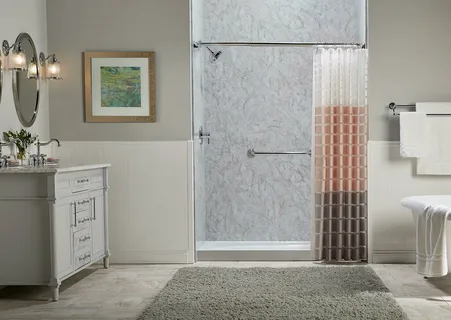
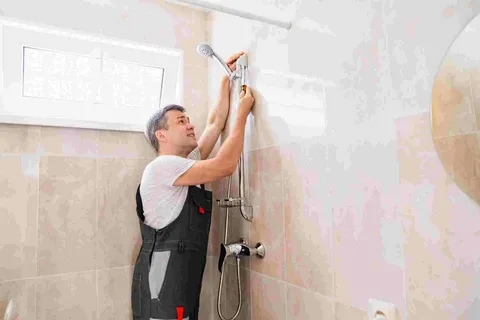
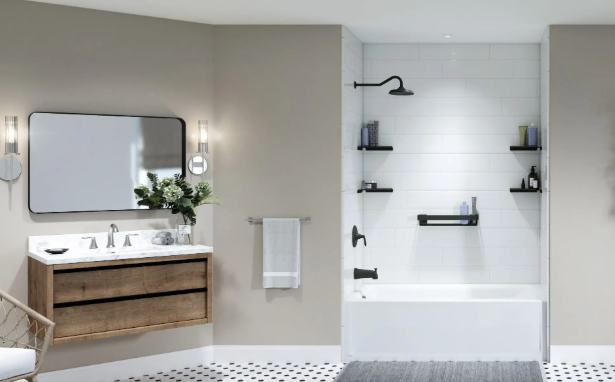
A tub to shower conversion removes your existing bathtub — typically an alcove-style fiberglass or steel tub surrounded by three walls — and replaces it with a low-threshold or zero-threshold shower base, waterproof wall panels, and a modern shower system. The process involves demolition of the old tub and surround, inspection and repair of the subfloor and wall framing, installation of a new shower pan with proper sloping and waterproofing, wall panel installation, plumbing rough-in adjustments for the shower valve and head, and finishing with trim, doors, and accessories. tub to walk-in shower conversion
In Farmington, we’ve noticed that most homeowners assume a tub to shower conversion is just a swap — take out the tub, put in a shower, done. It isn’t. The drain location often needs to move from the center of the tub to the corner or edge of the new shower pan. The wall framing may be damaged or out of plumb after decades of moisture exposure. The subfloor beneath the tub might be soft from slow leaks you never noticed. And the plumbing — especially in homes built in the 1960s, 1970s, and 1980s that dominate Farmington’s housing stock — may be galvanized steel or copper with pinhole corrosion that needs replacement before it fails behind your new walls.
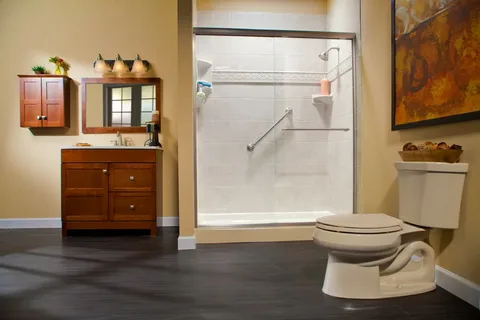
Walk-in shower installation also involves critical decisions about accessibility and safety. A low-threshold entry — typically 3 to 4 inches high — eliminates the high step-over that causes falls. Grab bars need blocking in the wall framing before tile or panels go up. A handheld showerhead on a sliding bar allows seated bathing. A built-in seat or fold-down bench provides stability. These aren’t afterthoughts. They need to be planned before the first panel is installed. Marathon Bath Systems designs every conversion with your current and future needs in mind.
The Real Challenge of Bathroom Remodeling in Farmington’s Older Homes
Farmington and Farmington Hills sit in Oakland County, northwest of Detroit, with a housing stock heavily weighted toward mid-century ranches, split-levels, and colonial-style homes built between 1950 and 1990. These homes were built for families, not for aging-in-place accessibility. tub to walk-in shower conversion Bathrooms are often small — 5 by 7 feet or 5 by 8 feet — with narrow doorways, tight turning radiuses, and plumbing walls that weren’t designed for modern fixtures. The challenge isn’t just removing a tub. It’s reconfiguring a constrained space to accommodate a walk-in shower, proper clearances, and accessibility features without gutting the entire bathroom or moving load-bearing walls.
Michigan’s climate adds another layer. Freeze-thaw cycles, high humidity in summer, and dry winter air stress building materials year-round. Galvanized plumbing common in pre-1970s homes corrodes from the inside out, often failing catastrophically behind walls. Original cast iron drain lines crack and settle. Subfloors in bathrooms with original tile are often multiple layers thick, raising threshold heights and complicating transitions. And many homes have had multiple DIY updates over the decades — layers of flooring, patched drywall, and mismatched plumbing that create a puzzle for any contractor.
A client in the Farmington Hills area reached out after their spouse slipped getting out of the tub and fractured a hip. The bathroom was a 1972 original with a steel tub, plastic surround, and a window directly over the tub that made a full surround impossible without relocating the window. We removed the tub, relocated the drain, installed a low-threshold acrylic shower base with a textured slip-resistant surface, added reinforced blocking for grab bars, and used solid surface wall panels that eliminated grout lines and resisted mold. The window was replaced with a tempered glass privacy window set higher in the wall. The project took three days, and the client could shower independently within a week of completion. tub to walk-in shower conversion
Here’s what most competitors won’t tell you: an acrylic liner system installed over your old tub is not a true conversion. Some companies sell “tub-to-shower conversions” that are actually bathtub liners with a cut-down wall and a shower adapter. The old tub stays in place, hidden beneath a thin acrylic shell. The drain is still the tub drain. The subfloor issues are still there. And the structural integrity of the old tub — which may be rusted, cracked, or poorly supported — is never addressed. This approach is faster and cheaper, but it isn’t a conversion. It’s a cover-up. Marathon Bath Systems removes the old tub completely, inspects and repairs the substructure, and installs a true walk-in shower built from the ground up.
How Marathon Bath Systems Approaches Every Conversion Differently
Most bathroom remodeling companies in the Detroit metro area follow a volume model: schedule as many jobs as possible, use the cheapest materials, finish in a day or two, and move on. Marathon Bath Systems treats every tub to shower conversion as a custom accessibility project, not a product installation.
We inspect the structure before we quote. Every project starts with a detailed evaluation of your existing plumbing, subfloor condition, wall framing, and drainage. We test for leaks, check drain line material and condition, and assess whether your water pressure and supply lines can support modern shower fixtures. You get a written scope of work that specifies exactly what we’re doing and why.
We handle the plumbing correctly. Moving a drain from the center of a tub to the corner of a shower pan isn’t cosmetic — it’s plumbing. We adjust drain lines, replace corroded supply lines, and ensure proper venting so your new shower drains quickly and doesn’t gurgle or back up. We also install pressure-balancing or thermostatic shower valves that prevent scalding when someone flushes a toilet elsewhere in the house.
We build for accessibility from the frame out. Grab bars need solid backing in the wall framing — not just anchors in drywall. We install 2×10 or plywood blocking between studs at strategic locations before any panels go up. If you need a built-in seat, we frame it to ADA standards with proper slope for drainage. If you want a handheld showerhead, we position the slide bar for seated and standing use. These details are planned, not improvised. tub to walk-in shower conversion
We use materials that last in Michigan’s climate. Acrylic shower bases with anti-microbial silver ion protection resist mold, mildew, and staining without the grout maintenance of tile. Solid surface wall panels expand and contract less than tile with Michigan’s temperature swings, eliminating grout cracks. And our shower doors use tempered glass with protective coatings that resist hard water spotting — a real issue in Oakland County, where water hardness runs 120 to 180 ppm.
We protect your home during construction. Bathroom demolition generates dust, debris, and noise. We seal the work area with plastic sheeting, use HEPA vacuums, and protect flooring in adjacent rooms. We also work efficiently — most conversions are completed in 2 to 4 days — so you’re not living in a construction zone for weeks.
Working with clients in Farmington, our team found that homeowners who plan ahead for aging-in-place needs — installing grab bars, low-threshold entries, and handheld fixtures before they’re medically necessary — avoid the emergency renovation rush that happens after a fall or health crisis. A proactive tub to shower conversion costs the same whether you’re 55 or 75, but the peace of mind and injury prevention value is immeasurable.
Practical Tips: What to Know Before You Convert Your Tub
Verify that a tub-to-shower conversion works for your bathroom layout. Most alcove tubs convert cleanly to a walk-in shower. But if your tub is in a corner, under a window, or in a room smaller than 5 by 7 feet, you may need design adjustments. A window over the tub can be replaced with a higher privacy window or covered with a waterproof surround. A corner tub may require a custom shower base. Marathon Bath Systems evaluates your specific layout and recommends solutions that fit your space and budget.
Ask about the drain and plumbing. Any legitimate conversion involves moving or adjusting the drain to match the new shower pan. If a contractor tells you they can “use the existing drain” without modification, they’re either cutting corners or installing a liner over your old tub. Neither is a true conversion. Get a written scope that specifies drain relocation, supply line updates, and valve replacement.
Consider the threshold height carefully. A zero-threshold shower — level with the bathroom floor — is ideal for wheelchair access but requires significant subfloor modification and waterproofing. A low-threshold base at 3 to 4 inches is easier to install, provides excellent accessibility for most users, and contains water better. A standard 6-inch threshold is cheaper but doesn’t offer the safety benefits that motivate most conversions. Marathon Bath Systems explains the trade-offs and helps you choose based on your actual needs.
Plan for grab bars even if you don’t need them yet. Even if you’re steady on your feet today, grab bars add safety for guests, recovery from surgery, and future aging. Installing blocking during the conversion costs almost nothing. Retrofitting blocking after walls are closed is expensive and destructive. We install blocking standard, even if you don’t install bars immediately.
Don’t ignore the fan. Michigan bathrooms need proper ventilation to prevent moisture buildup, especially in winter when windows stay closed. If your existing exhaust fan is noisy, undersized, or venting into the attic instead of outside, replace it during the conversion. A quiet, properly sized fan with a humidity sensor runs automatically and protects your new shower from mold and mildew.
In Farmington, we’ve noticed that most homeowners focus on the shower appearance — tile pattern, wall color, door style — but under-invest in the substructure and plumbing. A beautiful shower built on a rotted subfloor with corroded pipes is a disaster waiting to happen. Marathon Bath Systems spends as much time on what you can’t see as on what you can.
Why Farmington Homeowners Are Making the Switch Now
The decision to remove a bathtub isn’t just about aesthetics or even safety. It’s about maintaining independence in your own home. A tub that requires stepping over a high wall, balancing on one foot, and lowering yourself into a slippery surface is a daily risk. For older adults, that risk translates to falls, fractures, and loss of autonomy. For younger homeowners, it’s about future-proofing the home they plan to stay in for decades.
A walk-in shower conversion eliminates that risk. It creates a bathroom that works for a sprained ankle, a hip replacement recovery, a wheelchair, or simply the normal aging process. It also modernizes your bathroom, increases your home’s resale appeal to buyers who value accessibility, and eliminates the maintenance headaches of old tubs, grout, and caulk.
Marathon Bath Systems brings Farmington-specific expertise, aging-in-place design knowledge, and a refusal to cut corners to every tub to shower conversion we perform. Whether you need a simple low-threshold replacement or a full accessibility redesign with a built-in seat, grab bars, and handheld fixtures, we evaluate your space, your plumbing, and your needs honestly. From structural inspection to final cleanup, every step is designed for a shower that keeps you safe and your bathroom beautiful. Contact Marathon Bath Systems today for a tub to walk-in shower conversion near me in Farmington, MI, and take the first step toward a bathroom that works for your life.
Frequently Asked Questions
How much does a tub to shower conversion cost in Farmington, MI?
Most tub to shower conversions in the Farmington area range from $3,000 to $8,000 depending on materials, plumbing complexity, and accessibility features. A basic acrylic surround with a low-threshold base typically runs $3,500 to $5,500. Custom tile work, drain relocation, plumbing updates, and full accessibility packages with grab bars and built-in seating can push costs to $7,000 to $10,000. Marathon Bath Systems provides detailed, written estimates after a free in-home evaluation — no hidden fees, no pressure.
How long does a tub to shower conversion take?
Most tub to shower conversions are completed in 2 to 4 days. Simple acrylic installations with minimal plumbing changes may finish in 1 to 2 days. Projects requiring drain relocation, subfloor repair, window adjustments, or custom tile work may extend to 3 to 5 days. Marathon Bath Systems provides a realistic timeline during your estimate and protects your home from dust and disruption throughout the project.
How do I know Marathon Bath Systems is a legitimate, trustworthy contractor?
Marathon Bath Systems is a locally operated bathroom remodeling company serving Farmington, MI and the greater Oakland County area. We provide proof of general liability and workers’ compensation insurance, local references from recent tub to shower conversion projects, and detailed written scopes of work before any job begins. Ask to see our portfolio, visit a completed project, and verify our insurance certificates. A professional walk-in shower installation contractor has nothing to hide.
Will removing my bathtub hurt my home’s resale value?
In most cases, no — especially if you’re converting the only tub in a full bathroom that serves as the primary bath for the household. Real estate data shows that homes with at least one tub retain broader buyer appeal, but if you have multiple bathrooms, converting one tub to a walk-in shower is a net positive. For aging-in-place buyers and empty-nesters, a walk-in shower is actually a selling point. Marathon Bath Systems discusses your specific home layout and resale goals during consultation to help you make the right decision.
Can I keep my existing plumbing and just swap the tub for a shower?
Rarely. Tub drains are centered and designed for a horizontal flow. Shower drains are typically offset to the corner or edge of the pan and require a different trap configuration. Your water supply lines may need updating to support a modern pressure-balancing valve. And the wall framing behind the tub often needs repair or modification. Marathon Bath Systems evaluates your plumbing during the initial inspection and explains exactly what needs to change and why. We don’t sell cover-ups — we build proper conversions.