
Most Northville homeowners don’t realize how wide the price gap really is until they get two quotes that differ by eight thousand dollars for what looks like the same job. That single moment of sticker shock is exactly why understanding the real cost breakdown matters before you ever pick up the phone. At Marathon Bath Systems, we’ve completed hundreds of tub-to-walk-in-shower conversions across Northville and Southeast Michigan, and the question we hear most isn’t “can you do it” — it’s “what’s this actually going to cost me?”
So let’s answer that honestly. No vague ranges that stretch from a thousand dollars to a remodel that costs more than a car. Instead, here’s what drives the number, where your money goes, and how to read a quote like someone who’s seen the inside of a hundred Northville bathrooms.
What Shapes the Cost of a Tub-to-Shower Conversion in Northville
The phrase “tub to shower conversion” hides a huge amount of variation. One homeowner pictures a quick acrylic swap. Another imagines a spa-like tiled wet room with a rain head and a bench. Both are “conversions,” yet they live on opposite ends of the price spectrum. That’s the first thing to understand: you’re not buying a fixed product. You’re buying a set of decisions.
The Real Price Range Northville Homeowners See
Nationally, a tub-to-shower conversion runs between roughly $2,000 and $12,000, with pricing driven largely by shower type, plumbing adjustments, and structural complexity. But Northville isn’t a national average. It sits in the Detroit metro, where labor and material costs trend a touch higher than the heartland.
In the Detroit area specifically, converting a tub into a walk-in shower ranges from about $1,000 to $16,500 depending on size, material, style, shower doors, and plumbing work, with a custom tiled walk-in landing between $4,000 and $16,500. For most Northville projects, the realistic sweet spot lands somewhere between $6,000 and $15,000 — which matches what licensed Michigan contractors report as the typical range for walk-in shower conversions.
Why Two Quotes Can Differ by Thousands
Here’s the part nobody explains. A neighbor on your street might pay $4,500 while you’re quoted $11,000 — and both quotes can be fair. The difference usually comes down to three hidden variables: what’s behind your walls, what material you choose, and whether your plumbing has to move.
Think of it like buying a car. A base model and a loaded trim get you to the same destination, but the price reflects every upgrade along the way. A conversion works the same way, and the smartest thing you can do is figure out which “trim level” actually fits how you live.
Breaking Down Where Your Money Actually Goes
A conversion quote isn’t one number. It’s a stack of smaller costs, and once you see them itemized, the whole project stops feeling mysterious. Let me walk you through the layers the way I would if we were standing in your bathroom together.
Demolition and Tub Removal
Every conversion starts with getting the old tub out, and this step alone can swing your budget. A lightweight fiberglass tub lifts out easily. A vintage cast iron tub is a different animal — those things can weigh 300 pounds, and hauling a heavy cast iron tub out can add $500 or more just for removal.
In the Detroit metro, removing and disposing of an old bathtub typically costs $200 to $400, and many affordable bathtub to walk-In shower cost in Northville, MI contractors fold that figure directly into the project total. Always ask whether disposal is included. It’s a small line item that surprises people more than it should.
Materials: Acrylic, Cultured Stone, or Tile
This is the single biggest lever on your final cost. The wall surface you choose changes everything downstream — labor hours, maintenance, durability, and resale appeal. Here’s how the three main paths compare in real Michigan pricing.
Acrylic and Prefab Systems — The Budget-Friendly Path
Acrylic shower systems are the workhorses of affordable conversions. Prefabricated shower stalls made from acrylic or fiberglass usually cost between $700 and $1,600 for the kit itself, and installed, an acrylic pull-and-replace conversion in the broader Michigan market typically runs $8,500 to $12,500. They install fast, resist mold, and wipe clean in seconds. The trade-off is fewer design options.
Cultured Stone — The Middle Ground
Cultured stone (sometimes called marble composite) gives you a richer, more solid look without the grout lines of tile. In Michigan, cultured stone conversions tend to fall between $13,500 and $17,000. It’s the choice for homeowners who want something more premium than acrylic but still low-maintenance.
Custom Tile — The High-End Statement
Tile is where budgets climb and bathrooms become showpieces. A tiled tub-to-shower conversion in Michigan commonly runs $16,000 to $26,000, and a custom tiled walk-in across the country generally costs $3,500 to $15,000 for the tilework alone, with the range driven mostly by material selection. Beautiful, endlessly customizable, and the most labor-intensive option you can pick. Tile also means grout, which means upkeep.
Plumbing, Permits, and Labor in Michigan
Two more costs that quietly shape your quote. First, plumbing. If your new shower drain and valve line up with the old tub’s connections, you save money. If they have to be relocated, labor hours climb fast.
Second, permits — and this one isn’t optional. Michigan requires a plumbing permit for any project that alters or replaces plumbing fixtures, which a tub-to-shower conversion always does, with permit costs typically running $50 to $200 depending on the municipality. A reputable Bathtub to Walk-In Shower Cost in Northville contractor pulls that permit and schedules the inspection for you. If someone offers to skip it to save you a few bucks, walk away. That shortcut can haunt you at resale.
Choosing the Right Type of Walk-In Shower for Your Budget
Now that you know where the money goes, the real question becomes which style of conversion actually suits your home, your timeline, and your wallet. There’s no single right answer here — only the right answer for you.
Prefab and Acrylic Systems
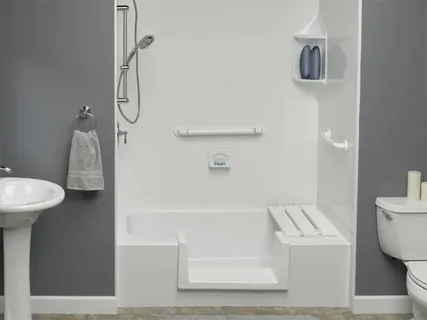
If your priority is speed and value, a prefab acrylic system is hard to beat. These conversions often finish in a single day, and the surfaces are practically maintenance-proof. They’re the go-to for rental properties, busy families, and anyone who wants a clean, modern shower without a multi-week project disrupting the house.
The honest limitation is design flexibility. You’re choosing from set sizes, finishes, and accessory packages. For most Northville bathrooms, though, that catalog is wider than people expect — built-in niches, grab bars, and seating are all available.
Custom Tiled Walk-In Showers
Custom tile is for homeowners who see the bathroom as a long-term investment in how their home feels. You control the layout, the threshold height, the bench, the glass, the everything. A frameless glass enclosure and a curbless entry can turn an ordinary alcove into the kind of space that sells a house.
It costs more and takes longer, no way around that. But if you’re staying in your Northville home for the next decade or planning to list it as a premium property, tile earns its keep.
Is the Conversion Worth It? Value, ROI, and Accessibility
Cost is only half the conversation. The other half is value — and a tub-to-shower conversion delivers on more fronts than most homeowners anticipate. This is the part where I get a little opinionated, because I’ve watched what these projects do for people.
What You Get Back at Resale
Bathrooms move buyers. A recent study found that 70% of Americans planning a home project were planning a bathroom remodel, and a well-executed shower conversion signals “move-in ready” the moment someone walks in. Local Northville remodeling data puts a full bathroom remodel between $5,000 and $15,000 for most projects, with luxury custom work exceeding $20,000 — and a focused conversion lets you capture much of that appeal for less.
One caveat I always share: if your home has only one tub, removing it can narrow your buyer pool, since some families with young kids want a tub. If you’ve got a second bathroom with a tub, converting your primary bath to a sleek walk-in is almost always a smart call.
Aging in Place and Safety
This is where the conversion stops being cosmetic and becomes genuinely life-changing. High tub walls are one of the most common fall hazards in a home. A low-threshold or curbless walk-in shower, paired with ADA-compliant grab bars and non-slip flooring, lets people stay in the homes they love, safely, for years longer.
In our 2026 work across Northville, accessibility has become one of the top reasons homeowners reach out — not because of an emergency, but because they’re planning ahead. That’s exactly the right instinct. Retrofitting after a fall is reactive. Converting now is wise.
How to Get an Accurate Quote and Avoid Surprise Costs
You’ve got the cost framework. The final piece is making sure the number you’re quoted is the number you actually pay. Vague estimates are where budgets go to die, so here’s how to protect yourself.
Questions to Ask Before You Sign
Ask whether tub removal and disposal are included. Ask if the quote covers the plumbing permit and inspection. Ask what happens if they open the wall and find water damage or rot — because in older Northville homes, they sometimes do. A contractor who answers these plainly is one you can trust. A contractor who gets cagey is telling you something, too.
Get everything in writing, and make sure the material grade is specified. “Acrylic walls” and “custom tile” are worlds apart, and a quote that doesn’t say which one you’re getting isn’t really a quote.
Timeline: What to Expect
A straightforward prefab conversion typically takes one to three days, covering tub removal, plumbing adjustments, and fixture installation. Custom tile stretches longer — often a week or more once you account for waterproofing, setting, and grout cure time. Plan your household around it, especially if it’s your only bathroom.
Conclusion
A bathtub to walk-in shower conversion will most likely cost you somewhere between $6,000 and $15,000, and the figure you land on depends almost entirely on three things: the material you choose, whether your plumbing has to move, and what the crew finds once the old tub comes out. Acrylic keeps you on the affordable end. Tile pushes you toward the premium tier. Everything else is detailed.
The move that saves the most money isn’t choosing the cheapest contractor — it’s choosing the one who itemizes honestly, pulls the permit, and tells you the truth about what’s behind your walls. Get two or three detailed quotes, ask the hard questions, and match the project to how you actually live. Do that, and you’ll spend exactly what you should — not a dollar more.
Frequently Asked Questions
How long does a walk-in shower conversion take?
A prefab acrylic conversion usually finishes in one to three days. Custom tile installations take longer, often a week or more, because waterproofing and grout need time to cure.
Will removing my tub hurt my home’s resale value?
Only if it’s your home’s sole tub. If a second bathroom keeps a tub, converting your main bath to a walk-in shower usually adds appeal and signals a move-in-ready home.
What’s the cheapest way to convert my tub?
A prefab acrylic or fiberglass shower system is the most affordable route. The kits start low, install fast, and resist mold, though design choices are more limited than tile.
Are walk-in showers good for aging in place?
Absolutely. A low-threshold or curbless walk-in with grab bars and non-slip flooring removes the high tub wall, one of the most common fall hazards, making the bathroom far safer.